
The decision explored here is Industrial Two-Way Radio Solutions for Factories and Plants. Plan dependable factory radio systems around noise, metal obstacles, shift handovers, safety areas, dispatch and maintenance.. The right result depends on the real working environment, technical evidence and how the equipment will be operated and maintained—not simply the longest specification list or a brochure claim.
Wireless Signal approaches this subject as a practical engineering and procurement problem. The following sections distinguish verified equipment capabilities from assumptions, set out the site checks that matter, and explain how to ask a supplier for a proposal that can be tested and accepted. Application, frequency assignment and availability must be checked for each actual deployment.
1. Radio communication supports operational safety
In a noisy factory, a brief call may coordinate a production stop, maintenance intervention or security response. Map business-critical workflows and the operators who need immediate communication before choosing device models. Emergency call rules, escalation and coverage in hazardous or remote process areas should be part of the operational requirements.
2. Speech intelligibility near machinery
Test microphones, noise reduction and approved speaker-microphones next to compressors, forklifts and ventilation plant. Speaker loudness alone does not guarantee intelligible communication. Certain operators may need hearing-protection-compatible accessories, with safety and device compatibility checked. Establish concise call procedures and training rather than relying solely on advanced hardware features.
3. Metal obstacles and multi-building coverage
Steel structures, tanks and multiple buildings can create radio shadows and unpredictable reflections. Verify calls in both directions across critical process areas and at shift boundaries. Antenna repositioning or engineered repeater infrastructure may deliver better results than swapping every handset, provided frequency authorization, isolation and site resilience are addressed.
4. Hazardous areas require specific certified equipment
Sites with explosive gas or combustible dust hazards need equipment selected against the actual classified zone and protection requirements. An IP code is not evidence of explosion protection. Even a device advertised with ATEX certification must be checked against its certificate markings, gas/dust group, temperature limits and the exact batteries and accessories being used.
5. Maintainable systems and acceptance criteria
Document radio assets, firmware, programming backups, repeater sites, antennas, talk groups and accessory inventory. Validate incident scenarios under safe test conditions, including power or network component failures. Set maintenance intervals and an accountable owner for configuration changes. An accepted system should be reproducible and serviceable, not dependent on one technician's undocumented setup.
6. Technical decision matrix
A useful comparison matrix for Industrial Two-Way Radio Solutions for Factories and Plants should record evidence rather than assign points solely from brochures. The following five checks align the technical discussion with a testable procurement decision.
| Evaluation area | Evidence required | Acceptance principle |
|---|---|---|
| 1. Radio communication supports operational safety | Request model-specific evidence, a configuration screenshot or field measurement. | Pass only when the required operation can be demonstrated and supported. |
| 2. Speech intelligibility near machinery | Request model-specific evidence, a configuration screenshot or field measurement. | Pass only when the required operation can be demonstrated and supported. |
| 3. Metal obstacles and multi-building coverage | Request model-specific evidence, a configuration screenshot or field measurement. | Pass only when the required operation can be demonstrated and supported. |
| 4. Hazardous areas require specific certified equipment | Request model-specific evidence, a configuration screenshot or field measurement. | Pass only when the required operation can be demonstrated and supported. |
| 5. Maintainable systems and acceptance criteria | Request model-specific evidence, a configuration screenshot or field measurement. | Pass only when the required operation can be demonstrated and supported. |
7. Seven steps to evaluate and deploy the solution
For Industrial Two-Way Radio Solutions for Factories and Plants, start with a site-specific design rather than ordering by product family alone. The plan below makes different supplier proposals comparable and creates a defensible handover record.
- Identify the exact people, departments, sites, shift patterns and critical calls covered by the requirement.
- Document which equipment functions must work from day one and which are merely desirable.
- Confirm authorized frequency assignments or network service dependencies before choosing a specific device variant.
- Pilot the proposed equipment in representative hard-to-reach or high-noise locations, with calls in both directions.
- Define performance acceptance criteria, failure behavior, spare devices and emergency procedures with the operations team.
- Compare complete hardware, accessories, infrastructure, programming, training, warranty and ongoing service costs.
- Retain signed acceptance results and configuration records, and repeat tests whenever the site or network changes.
8. Common decision mistakes to avoid
- Treating an international product specification as automatic permission to operate at that frequency or output power in Saudi Arabia.
- Assuming a radio feature or software option shown on one version is present on every hardware variant.
- Using advertised range, channel memory or speaker wattage as a substitute for coverage and operational tests.
- Comparing equipment price alone while omitting accessories, repairability, programming, training and infrastructure.
- Declaring the project complete before testing the hardest locations, busy shifts and credible failure conditions.
Engineering principle: Radio communication supports operational safety matters only when its effect is demonstrated in the intended operation. Test performance, verify legal use and keep a written basis for the purchasing decision.
9. BelFone equipment worth evaluating
The models below are examples for comparing available solutions, not an assertion of guaranteed availability or automatic interoperability. The exact band, accessories, configuration and suitability must be verified for the project.
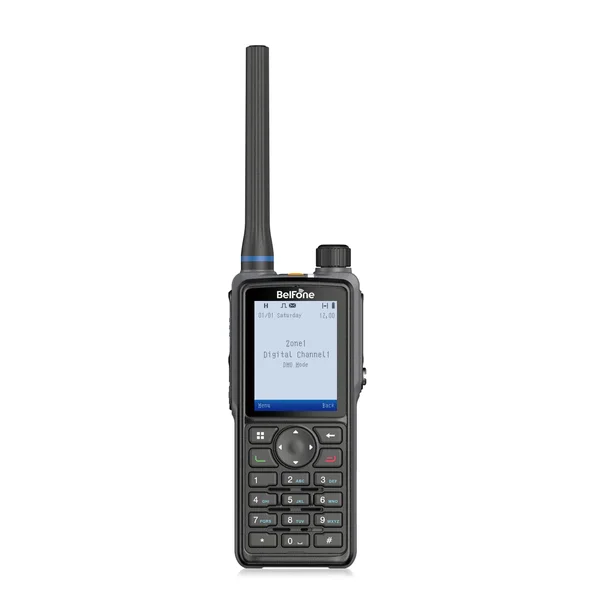
BelFone BP-860
Professional digital handheld for fleet evaluation; confirm its frequency version, programming and accessories for the actual project.
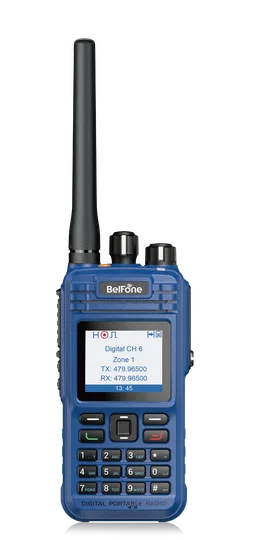
BelFone BF-TD511EX
Hazardous-area radio with specific published ATEX markings; verify the certificate, battery and exact site classification.
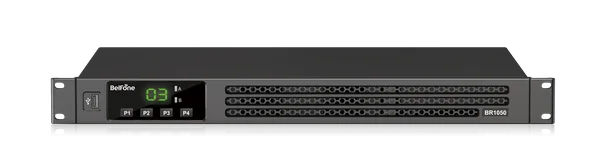
BelFone BR1050
1U professional DMR repeater with manufacturer output up to 50 W; requires authorized frequencies, antenna design and commissioning.
10. Saudi regulatory and operating checks
Saudi radio frequency use is regulated according to service and application by the Communications, Space & Technology Commission (CST). A manufacturer's globally listed frequency band, power rating or marketing claim does not by itself authorize operation on a chosen channel. Check the applicable service classification, any required frequency assignment or equipment approvals, and current import and operating conditions before purchasing or transmitting.
Operational success also depends on reliable support, staff training, safe battery handling and documented maintenance. The technical acceptance plan should be adjusted to the application's actual risk, including the impact of missed calls or infrastructure failure.
Frequently asked questions
Can ordinary radios operate in an explosive atmosphere?
Use the site's hazard classification and only equipment certified and accepted for that application.
Will one repeater eliminate every dead zone?
No. Coverage must be surveyed and some facilities require multiple engineered sites.
How do we test factory audio?
Use intelligibility tests in real noise conditions with the intended accessories.
Do published device specifications alone guarantee results for this project?
No. Exact variants, site coverage, operational capacity, permissions and user procedures must be verified together before acceptance.
Need a site-specific technical assessment?
Send us the city, site layout, number of users, existing radios and required services. Wireless Signal can help define a compliant equipment shortlist, coverage test and practical quotation.
Technical and regulatory references
- DMR Association — DMR Standards
- EU Directive 2014/34/EU — ATEX equipment
- CST — Radio Frequency Licenses
Educational material only: not a frequency license, product availability confirmation, guaranteed range or site-specific safety approval. Verify the applicable documents and deployment conditions.