
The decision explored here is Designing a Fixed Two-Way Radio Base Station for Control Rooms. Practical guidance for dispatch consoles, fixed antennas, backup power, base-radio programming and control-room communication.. The right result depends on the real working environment, technical evidence and how the equipment will be operated and maintained—not simply the longest specification list or a brochure claim.
Wireless Signal approaches this subject as a practical engineering and procurement problem. The following sections distinguish verified equipment capabilities from assumptions, set out the site checks that matter, and explain how to ask a supplier for a proposal that can be tested and accepted. Application, frequency assignment and availability must be checked for each actual deployment.
1. The base is the operator's fixed radio position
A fixed base station gives a dispatcher or security controller a consistent radio position for receiving incidents, calling teams and logging important communications. It may use a suitable mobile-type radio in a base installation or a more elaborate console. It should not be confused with a repeater, whose primary function is to relay radio traffic between network users.
2. Antenna engineering drives base performance
A properly mounted antenna with a suitable radiation pattern and low-loss feed line can have more effect than the radio's desk enclosure. Assess rooftop permissions, safe structural mounting, lightning protection, grounding and co-site interference. Verify reception from handhelds in all required zones rather than relying on a desktop power rating.
3. Prepare dispatch audio and workflow
Position desk microphones, loudspeakers and headsets for intelligibility and minimal acoustic feedback. Define call signs, talk groups, emergency escalation and access to channel changes. Recording, dispatch software and integration into other security systems may require dedicated interfaces, software licenses or additional devices rather than being included automatically in any base radio.
4. Power continuity and resilience planning
Operationally critical positions need stable power, appropriate backup capacity, safe cabling and ventilation. Do not assume a small UPS will support a transmitter for an entire outage without a load and runtime calculation. If communications depend on a distant repeater, consider that site's resilience as well and document a direct-mode fallback where workable.
5. Scaling from one control room to multiple sites
An organization may begin with one control room and later require distributed sites, linked repeaters, or a larger dispatch environment. Plan authorized spectrum, call capacity, permissions, dependence on inter-site data connectivity and failure behavior. A network diagram and configuration backup are more useful than adding unmanaged radios to multiple offices.
6. Technical decision matrix
A useful comparison matrix for Designing a Fixed Two-Way Radio Base Station for Control Rooms should record evidence rather than assign points solely from brochures. The following five checks align the technical discussion with a testable procurement decision.
| Evaluation area | Evidence required | Acceptance principle |
|---|---|---|
| 1. The base is the operator's fixed radio position | Request model-specific evidence, a configuration screenshot or field measurement. | Pass only when the required operation can be demonstrated and supported. |
| 2. Antenna engineering drives base performance | Request model-specific evidence, a configuration screenshot or field measurement. | Pass only when the required operation can be demonstrated and supported. |
| 3. Prepare dispatch audio and workflow | Request model-specific evidence, a configuration screenshot or field measurement. | Pass only when the required operation can be demonstrated and supported. |
| 4. Power continuity and resilience planning | Request model-specific evidence, a configuration screenshot or field measurement. | Pass only when the required operation can be demonstrated and supported. |
| 5. Scaling from one control room to multiple sites | Request model-specific evidence, a configuration screenshot or field measurement. | Pass only when the required operation can be demonstrated and supported. |
7. Seven steps to evaluate and deploy the solution
For Designing a Fixed Two-Way Radio Base Station for Control Rooms, start with a site-specific design rather than ordering by product family alone. The plan below makes different supplier proposals comparable and creates a defensible handover record.
- Identify the exact people, departments, sites, shift patterns and critical calls covered by the requirement.
- Document which equipment functions must work from day one and which are merely desirable.
- Confirm authorized frequency assignments or network service dependencies before choosing a specific device variant.
- Pilot the proposed equipment in representative hard-to-reach or high-noise locations, with calls in both directions.
- Define performance acceptance criteria, failure behavior, spare devices and emergency procedures with the operations team.
- Compare complete hardware, accessories, infrastructure, programming, training, warranty and ongoing service costs.
- Retain signed acceptance results and configuration records, and repeat tests whenever the site or network changes.
8. Common decision mistakes to avoid
- Treating an international product specification as automatic permission to operate at that frequency or output power in Saudi Arabia.
- Assuming a radio feature or software option shown on one version is present on every hardware variant.
- Using advertised range, channel memory or speaker wattage as a substitute for coverage and operational tests.
- Comparing equipment price alone while omitting accessories, repairability, programming, training and infrastructure.
- Declaring the project complete before testing the hardest locations, busy shifts and credible failure conditions.
Engineering principle: The base is the operator's fixed radio position matters only when its effect is demonstrated in the intended operation. Test performance, verify legal use and keep a written basis for the purchasing decision.
9. BelFone equipment worth evaluating
The models below are examples for comparing available solutions, not an assertion of guaranteed availability or automatic interoperability. The exact band, accessories, configuration and suitability must be verified for the project.
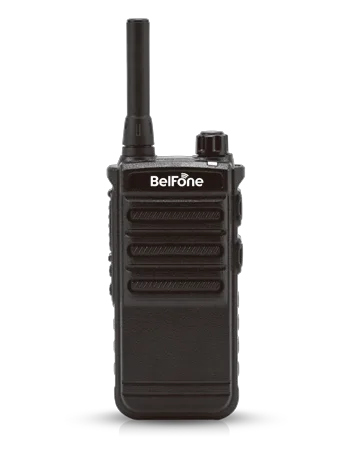
BelFone CM625
Mobile/base-style radio option; validate installation, antenna, authorized channel plan and operating configuration.
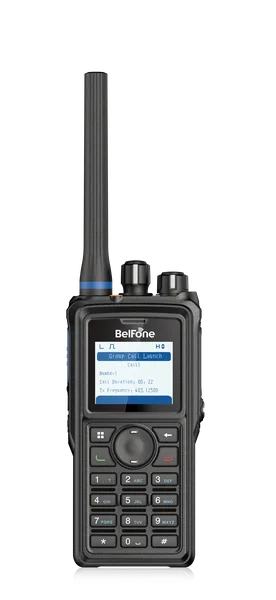
BelFone BP-660
Professional DMR handheld with band-specific variants; published IP68 protection and 2,000mAh battery, with practical range to be field-tested.
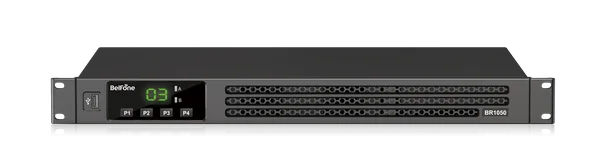
BelFone BR1050
1U professional DMR repeater with manufacturer output up to 50 W; requires authorized frequencies, antenna design and commissioning.
10. Saudi regulatory and operating checks
Saudi radio frequency use is regulated according to service and application by the Communications, Space & Technology Commission (CST). A manufacturer's globally listed frequency band, power rating or marketing claim does not by itself authorize operation on a chosen channel. Check the applicable service classification, any required frequency assignment or equipment approvals, and current import and operating conditions before purchasing or transmitting.
Operational success also depends on reliable support, staff training, safe battery handling and documented maintenance. The technical acceptance plan should be adjusted to the application's actual risk, including the impact of missed calls or infrastructure failure.
Frequently asked questions
Does a security-desk base replace a repeater?
Not necessarily; they serve different roles and some sites require both.
Can base station calls be recorded?
Only with suitable system support and applicable policies; recording is not universal by default.
Does a base station need backup power?
It depends on outage tolerance and operational continuity requirements; calculate actual load and runtime.
Do published device specifications alone guarantee results for this project?
No. Exact variants, site coverage, operational capacity, permissions and user procedures must be verified together before acceptance.
Need a site-specific technical assessment?
Send us the city, site layout, number of users, existing radios and required services. Wireless Signal can help define a compliant equipment shortlist, coverage test and practical quotation.
Technical and regulatory references
- CST — Radio Frequency Licenses
- ITU-R P.1812 — Terrestrial propagation prediction
- DMR Association — DMR Standards
Educational material only: not a frequency license, product availability confirmation, guaranteed range or site-specific safety approval. Verify the applicable documents and deployment conditions.